
- The Big Three and Embracing Wellness
- Colorado and Camping
- Benefits of Walking after Meals
1. The Big Three
As I chronicle my activities month by month, July is always busy. My goal is not to brag but to give the reader an example of what an aging adult is doing to stay fit and have a health span that matches his life span. Many people today grapple with chronic pain, inflammation, and post-operative recovery. As an older adult, I must deal with all this too. Hhow I deal with these not only effects my physical well-being but also my emotional health and therefore my quality of my life. You and I must Embrace Wellness.
Peter Attia M.D. details 3 things to work on. 1. exercise 2. nutrition 3. sleep. It is possible to get out of order, if I don’t get enough sleep, I make poor food choices. This is the plan if you are in order. Dr. Attia wants you to picture what you want to be able to do in your last decade of life; then set up a program to be able to do that. None of us have control over the future, but why not lay the foundation to get there.
18 minute interveiw with Dr. Attia:
This is Lewis Howes’ interview in-depth with Dr.Attia 1hr 29 min.
2. Colorado and Camping

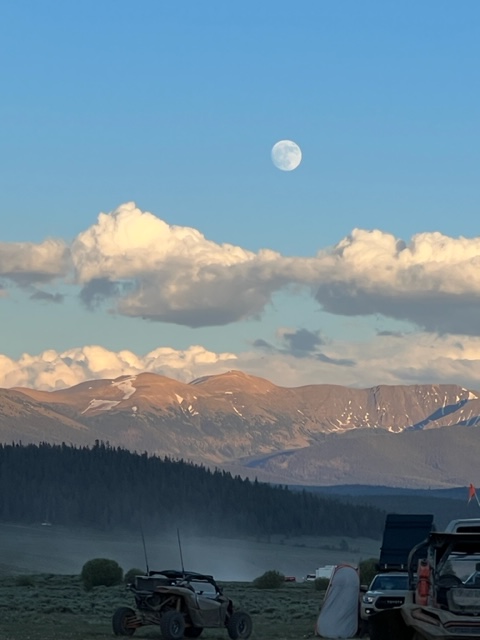
The weather was bipolar this year. At my daughter’s house in Colorado and anywhere we went, the weather held on to its insanity. We had two camping trips. The first trip was to Taylor Lake. This reservoir is in a valley at 9300 feet. It was a 4-hour drive to southern Colorado to meet friends. The camping is on an alluvial plain with snow-covered mountains all around. The days were long and fun-filled in the 70-degree range; at night the temperature dipped into the low 20s. I felt the chill. One morning, as I was warming in the first light, a black cloud came in with rocket speed and dumped a brief snow flurry on me. I was not ready and I had to sit in the car to get warm. However, the beauty of the “high country” area provides a “free pass” for any discomfort. I was invited by friends to go with them in their off-road vehicle “RZR” to Mirror Lake. This is a classically beautiful place. They fished, and I hiked. It is over 10,400 feet and is the gateway to the Continental Divide.

More bipolar weather waited for us on our second trip. This was Family camping for a week at Lake Mccaugnhy. My son and a friend joined us. This was a three-hour trip to Ogallala, Nebraska in the heart of cowboy history. This reservoir is on the North Platte River. The camping is like at the beach with sand and some trees. Day-time temperatures to the 80 and 90s with a night dip in the 60’s. Perfect for camping, right? This place is some kind of weather funnel. The first night, after we set up, the wind came with high-powered gusts and made its’ own arrangement of everything and even buried some stuff in the sand. The next day was sunny and we had a boat to play with, great time. Then rain, then sun, then wind. We went to bed to not deal with the weather. In the morning, we again played. Then the text came, tornado warning. We anchored almost everything. I sat in my tent through the 60-mile-an-hour wind. When it was over sand was in everything, everywhere, all the time. In the Biplor spirit, it was followed by a double rainbow.
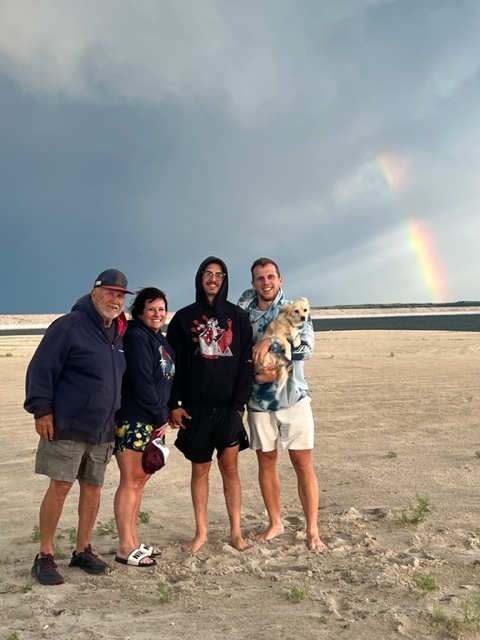
The wind and rain started to howl that night after our rainbow event. Early in the morning, I stuck my head out of the tent, like a turtle looking for a meal. The rest of the family was about packed and waiting for me. We enjoyed this place, but it was an adventure.
3. Benefits of Walking after Meals
This is from Healthline:Nutrition 6/22/23
| MAIN COURSE |
| Is it worthwhile to walk after eating? |
| Walking after meals, especially after dinner, is a time-honored tradition that may offer many health benefits, including aiding digestion, building muscle, and enhancing circulation. It may even improve your mental well-being. |
| Now, a new review of research provides further support for this tradition. |
| The researchers found that exercising shortly after eating can lower postmeal blood sugar levels. Elevated blood sugar is linked to metabolic syndrome, which is thought to affect more than one-third of Americans. Here are some more key takeaways from this review: |
| •Exercising within 30 minutes after a meal was found to be the most beneficial (and more effective than exercising before eating). |
| •Multiple short bouts of exercise after eating may be more effective than one long session. |
| •In addition to burning calories, postmeal movement can shift your body’s energy source toward using up glucose supplied by a meal. |
 More benefits of postmeal exercise: More benefits of postmeal exercise: |
| •The study found a beneficial effect in people with type 2 diabetes, though it was not as strong as in people without the condition. However, another study found that a 2-minute walk after meals can help lower type 2 diabetes risk. |
| •Regular postmeal activity may potentially reduce the risk of inflammation and cardiovascular disease in the long term. |
| Next step: After your next meal, consider lacing up your boots (or sneakers) and going for a stroll that’s at least 20 minutes long. It’s a simple, inexpensive, and effective way to energize your digestion and boost your overall health. As the authors of this review conclude, “After dinner walk a while, after supper walk again.” |
| Tell us: Do you like to go for a walk after eating? Is it something you do all the time, now and then, or never? Let us know at nutritionedition@healthline.com. (Please note that we may use your name and response in an upcoming newsletter!) |
Thanks to everyone who hosted me this summer. I return to Las Vegas renewed for the start of school in August. The old understand the young, better than the other way around.
In the spirit, be healthy,
Coach Brown
Please follow my blog.
 HEALTHY AT 120